|
Interview
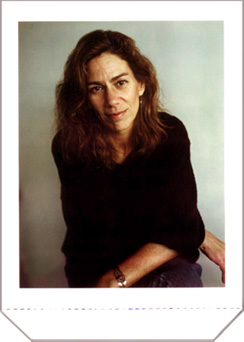
with Julia Dean, of The Julia Dean Workshops in Venice Beach,
California. She is the mind behind the international documentary
project Child
Labor and the Global Village: Photography for Social Change.
What
is social documentary photography to you and how did you get
involved in it?
Well,
I tried a lot of different kinds of photography to try to
figure out what type of photography I like the best. I did
sports, I was a sports photographer for 10 years. I did cycling,
skiing and all kinds of fun stuff. Then I took my first trip
overseas. I was photographing the Tour de France for some
cycling magazines and I ended up going to Greece to just photograph
on my own. I came back with some pictures that I really liked.
They were pictures of people and their environments, which
had cultural information I could start sharing with people.
And so I decided that I wanted to do that kind of photography.
One thing led to another and I became involved with different
people. I began to see what was going on around me, which
made me want to bring light to certain problems. So it's just
kind of become my mission along the years to do something
with my photography, whether it be just to educate students,
educate the public, get somebody motivated to action for something
or just teach people about people in general. I guess you'd
call that social documentary photography.
Do
you consider yourself more of a photographer or organizer
or both?
Both,
I guess. I have to do the organizing part because everything
I'm doing right now requires that. Luckily, I'm good at that
for the most part. I like them both. I like doing big projects
and taking on big things. It's a real challenge to me ...
to see how much I can get done in a day (laughs). I just like
it all. The way I like photography is to just go away for
an extended amount of time and just be a photographer, for
like a month at a time. That's a nice way to do it.
How
did the child labor project come about?
The project
originated in 1993 when I went to India for five months, Thailand
and Malaysia for a month after that. At the end of my India
trip, I started to become real troubled by seeing kids in
the workforce, living and working on the streets, living and
working in the train stations. When I came back I decided
that I wanted to do my share to bring light to the issue.
Not that other photographers hadn't covered it and hadn't
done a great job, there's some really nice work out there.
But I wanted to be a part of it.
And so
I decided that with my budget and time frame it would take
me 10 years to get to 10 countries, and that wouldn't be very
effective. Having been influenced by the group of photographers
on the Farm
Security Administration project -- Dorothea
Lange, Walker
Evans, all the documentary work from the Depression and
the '30s -- I was really inspired by that work many years
ago and at the time remember thinking, "Gee, there were
such social problems back then, but I don't really know if
there are any now." This is how young and naive I was.
Keeping all that in mind has just kind of come together with
this project. I decided that I wanted to have a team of people
like the FSA team, there were 11 of them which is where I
got my number from.
So I invited
four people onto the team who have worked with me in the past
on social issues and stories, then I had a big contest for
the rest of them. I flew my judges into L.A. -- including
the L.A. Times
Director of Photography Larry Armstrong, Bert Fox from National
Geographic and Kathy Ryan from The New
York Times Magazine -- and we had a big contest all weekend.
I had lots of students helping me from Santa Monica College,
which is where the contest was held and where I was also teaching
part time. They provided me with the room and everything,
which was really great. So at the end of the weekend we picked
the winners, or the judges did, and it ended up being a remarkable
team. We've got two
Pulitzer Prize winners, two L.A. Times photographers,
a National Geographic photographer, a W.
Eugene Smith winner ... an amazing, amazing team of people.
One of those people on the team was a student at the time,
which was one of the categories due to my interest in education.
I had a spot for one student and Brian Finke was the one who
got that. So we have 10 professionals and one student on the
team.
Are
you shooting for the child labor project?
I'm the
last one to go. I'm doing it that way because I couldn't relax
on my own story if I hadn't gotten everyone else out.
What
were the selections based upon?
Everyone
sent in up to 20 slides and then we had them all trayed and
ready to go. The judges and everyone else in the room would
click through them and decide.
What
were you looking for?
We were
looking for people who could tell a story. They had to have
a photojournalistic eye if not experience. The reason why
I brought these particular editors in is because they are
so good at what they do. They look at a lot of photography,
and there was a lot of photography there. It was a fascinating
process to watch.
How
many people applied?
One hundred
forty-five total and we picked six people. So it was terrific.
Six months later I flew the whole team into L.A. One of them
is from Paris, one from Rome, they were from all over the
place. We met at the Malibu Beach Inn. It was really lovely.
Then we got our story assignments and talked over the logistics
of the assignment. We talked about the issue itself and what
our mission was. Since then, I've sent one photographer out
and he has come back. That was Brian Finke, the student. He
went to India to do a story on children who live and work
in the train stations. He's also photographing a woman there
who started a school in the train station called the Platform
Schools to help these kids out. So the story's got kind of
a nice humanitarian angle saying, "Here's the problem,
but here's a possible solution." And that's one of the
things we're trying to do.
One of
the reporters on the project, Sarah Bachman, has really been
my right arm in all this. She's a real expert on the issue,
and she's writing her own book as well as our book. She and
I extensively researched all the stories and all the possibilities.
The final idea ultimately being my decision, with she and
Bert's help. We wanted to show the complexities of the issue,
not that there is one solution to the problem that will work.
We wanted to show what all is involved in the issue. So we've
got really good stories. Jon Warren is leaving this Monday
for Cambodia. His story is about children who work in the
garbage dump. He'll be gone five weeks. Clarence
Williams, from the L.A. Times, who won the Pulitzer last
year, is leaving for Burundi, Africa, the following week.
Do
you give the photographers specific contacts for their stories?
Clarence
is going to Burundi to photograph child soldiers, so you couldn't
go there without things being set up. One of the things Sarah
and I have been doing for the past three years is finding
the stories, finding the contacts and getting NGOs (Nongovernmental
Organizations) involved in helping us out. So for the most
part that's what we're doing, hooking up with NGOs.
How
long are each of these photographers in the field?
Well,
they are required to stay for 30 days, most people will probably
stay a little longer. I know that Clarence has given himself
extra time and John's given himself an extra week.
How
did it work out with those who have staff jobs?
They had
to get it okayed before they applied. When Clarence won, his
boss, Larry Armstrong, was there because he was one of the
judges -- when an L.A. Times person came up, I was the vote
instead of him. But anyway when Clarence won, I looked over
at Larry and said, "Okay, he's getting a month off, right?"
(laughs) Everyone else is a freelancer, we've only got two
staffers.
|
Do
they get paid for doing this?
They are
getting the basically equivalent to $200 a day for 30 days,
so they get $6000. The student got half that. And all their
expenses are covered. Well, they have to give me a budget
and I have to okay it. The money is coming from various places.
I'm doing all the fundraising. The budget is $400,000. It's
a big one. Kodak has come on board. They're giving us all
of our film for the whole project. A&I Color Lab, here
in L.A., is doing all of our processing for free. Some of
our sponsors so far have been United
Methodist, the International
Labor Organization in Geneva and World
Vision.
MSNBC
is doing a whole series of Web site stories on us. When Clarence
and Jon come back they're going to do all three of them. We're
going to try to get all of them published there. The project
is affiliated with a nonprofit group in San Francisco called
The Tides Center.
They are a real reputable group that is in business to house
projects like ours. They have a nonprofit status, so all the
donations that come my way are tax deductible. That allows
me to apply to big foundations.
Are
they shooting chrome?
Chrome
and B&W.
Interesting
choice. They're both good for different reasons.
Yep, yep.
It's a balance, we've got about half and half. Some people
are just B&W shooters or color shooters. Some stories
call for color, some for B&W.
I'll be
really happy when that first exhibit goes up. Right now it
seems like it's quite a long ways down the road, but not compared
to where it started.
Who's
editing the film?
Well I'm
one of the one's to do the first edit. Then I send it to Bert.
Ultimately the editing is his decision. I just look at it
and make my marks ... for fun (laughs). I want him doing that
because that's what he's good at.
Well,
I'm really impressed that you would take such a huge project
on. Were there any times when you were just like, "This
is the craziest thing ever?''
Like every
other day (laughs) ... I've been working on this for over
three years now -- from the moment I wrote my first four-page
proposal; it's now 65 pages long. I barely knew anything about
the issue in the world of child labor issues, and I just had
this thing I had to do. Looking back at the last three years,
sometimes near starvation because that's all I was doing,
I think, "Would I do this again if I knew all that I
know now?" And I'm like, "Yeah, probably."
I'm hoping to do one after the other with maybe a little rest
in between.
What
have you learned about the issue since taking it on?
That it's
very complex. That the solution is not necessarily to boycott
the product until kids are out of the factories, because then
they have to hit the streets and become prostitutes. So really
if there's only one easy solution to the whole thing, it's
education. These kids need to get an education. And if they
have to make money, it has to be regulated in some way by
the school system. There's some really horrible forms of child
labor, like bonded child labor, where kids are actually bonded
or chained to their rug looms or to make soccer balls in terrible,
terrible conditions. There's also child labor going on in
the United States, which is one of the places we're covering.
Really,
that's interesting...
Joel
Sartore is covering that story.
I love
his work.
Joel was
one of my first students in 1982. He was in the second class
I ever taught. He was 19. He seemed several decades younger
than I when I taught the class, but he was only eight years
younger than I.
And so
what's been the hardest part about the project so far? Logistics
or fund raising?
Well,
the logistics are fun. It's fun to hook up the photographers
with the contact, get their plane ticket. That's the exciting
part. Looking at the work is really great. The hardest part
is just raising money. It's not an easy task. I just got turned
down the other day by a foundation I was really hoping for,
the Coca Cola foundation, and I had a direct link there. So
I thought we had a pretty good chance there. I could wallpaper
my studio with the rejection letters. I've gotten a lot too,
so it's all about percentages of give out and what you get
back.
One of
the reasons I wanted to do this project is because there just
aren't any markets for this type of work. So I figured, "Well,
okay, if I can't get anyone to pay us to send 11 photographers
out than I'll just pay for it somehow and do it." I think
the second one will be easier than the first, based on what
I've learned. One day I'm a lawyer because I'm writing up
a contract, and the next I'm an editor looking at someone's
film. The next day I'm a fundraiser and a travel agent.
Are
you looking to be done in a year?
I'm hoping
to have everyone out and back in a year. Maybe it'll take
another six months to get the exhibit together and started.
What
are your end goals of the project?
Our ultimate
result will be an international exhibit starting in the U.S.,
a photographic book with some text, lots of magazine and newspaper
articles to get the word out about the issue. Finally, we
want some of the people from the nonprofit groups helping
us to be present at our exhibits for those who might want
to get involved. We don't want people to attend the exhibit
and say, "Well this is horrible, now what?" So people
will be able to get involved through these NGOs. They have
specific things they do to help this issue. People might want
to give by volunteering or give monetarily or just help spread
the word. I guess that's the main thing, educating people
and giving them ways in which to help.
Final
thoughts?
Well,
I feel like each step of the way has taken me a lot longer
than I had anticipated. I thought that I'd have this whole
thing done a year ago. But it's hard to do everything all
at once and make a living too. But it's worth it because unfortunately
the issue of child labor is not going away.
|